
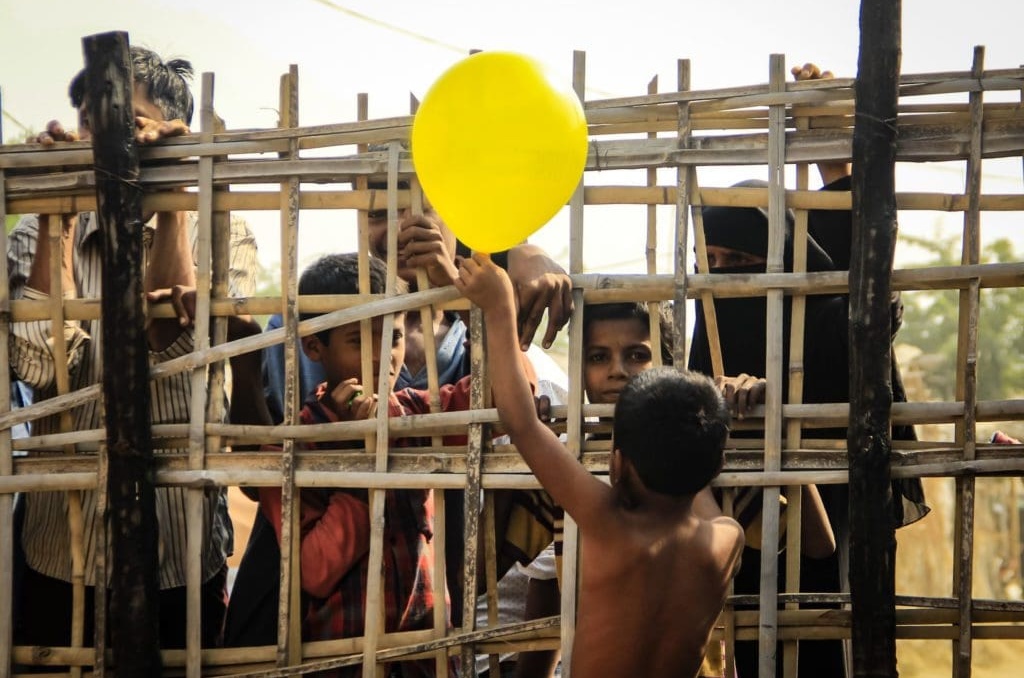
This feature story by Mysha Rizvi examines the deepening economic crisis facing Rohingya refugees in India. More than a decade after fleeing genocide and persecution in Myanmar, many Rohingya families continue to live in extreme hardship with little opportunity to rebuild their lives.
An estimated 40,000 Rohingya refugees live in India, many in informal settlements across Delhi. However, India has no national refugee law, and the government does not officially recognize refugee cards issued by the United Nations High Commissioner for Refugees (UNHCR). As a result, most Rohingya lack government-issued identification such as Aadhaar or PAN cards.
Without these documents, refugees are largely shut out of formal employment, banking services, and the digital payment systems widely used in India today. Many are therefore forced to rely on precarious work such as daily-wage labor, waste picking, and street vending, where they frequently face low pay, discrimination, and financial insecurity.
The story also highlights how the constant threat of detention or deportation prevents Rohingya families from planning for the future, trapping many in a persistent cycle of poverty and informal labor. Drawing on testimonies from Rohingya residents, researchers, and aid workers, the feature explores how statelessness, legal exclusion, and economic marginalization continue to shape the lives of one of the world’s most persecuted minorities.
You can read this feature story by Mysha Rizvi, a postgraduate student at Jamia Millia Islamia’s AJK Mass Communication Research Centre (AJK MCRC), written for the Indian news portal Maktoob Media, here: