
In today’s noisy social media age—when the world has truly become a global village—very few stories remain hidden for long. Whether something happens on the streets of a small village or in the political corridors of a major power, it can appear on screens around the world within moments. In such a world, hiding the truth is no longer as easy as it once was. Yet the unfortunate reality is that listening to the truth—and truly understanding it—remains just as difficult.
Stories of hatred and prejudice against Islam and Muslims are not new. Dedicated journalists have been documenting them for years. But sometimes an incident shakes you deeply, as if someone has placed a hand on your shoulder and said: this is a subject that can no longer be ignored.
I remember clearly when the United Nations declared the International Day to Combat Islamophobia in 2022. That announcement gave direction to many thoughts that had been forming in my mind. It made me feel that perhaps the time had come to take these stories more seriously—the stories of people in different parts of the world who are targeted simply because they are Muslims.
Scrolling through social media, I often come across images and videos that leave me deeply unsettled. Reports of violence against Muslims in Myanmar appear again and again—burned homes, frightened families, and silent eyes looking toward a world that often seems indifferent. At times, people are treated as if they are such a burden on this earth that they are forced into the sea while fleeing for their lives.
Then there are the messages I receive from places that rarely appear in global headlines. People from Nepal, for example, have written to say that mosques were set on fire after minor disputes were used as a pretext, or that individuals were targeted simply because they were Muslims. These incidents may never become international news, but for those who live through them, they are events that shape their entire lives.
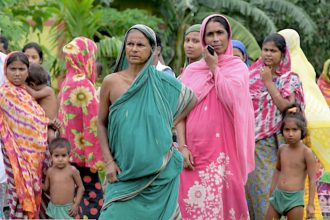
And then there are the two giant countries—China and India—home to roughly thirty-five percent of the world’s population. In both places, questions surrounding Muslim identity, religious freedom, and social status have become increasingly contentious. Yet discussions about these developments in the global media are often limited. In particular, these stories rarely receive the depth of attention in Western media that their scale and significance deserve.
As I continued to watch these developments, an idea slowly began to take shape in my mind. The question was simple: should Islamophobia be treated merely as a series of isolated news stories? Or should it be understood as a global reality—one that appears in different forms across countries but often grows from the same underlying roots?
This question eventually led to a decision at the beginning of 2023: why not create a platform where incidents of Islamophobia are not just reported as news, but documented as part of a larger record—a living archive that helps show what Muslims are experiencing in different parts of the world.
The idea began simply—a social media page. The plan was to collect and share stories from around the world. But, as often happens, the demands of daily life slowed the momentum the project needed.
Today, however, the context has changed. Islamophobia is once again at the center of global debate. Research reports suggest that nearly 70 percent of media coverage about Muslims in the United Kingdom links them to negative themes. Other reports indicate that anti-Muslim hostility in the United States has increased amid rising geopolitical tensions in the Middle East. In such a climate, an important question emerges: if we only listen to the stories of a few countries, can we truly understand the full picture?
Probably not. That is why it is important to bring forward stories from the rest of the world—stories from societies where Islamophobia may be growing quietly, and from people whose voices have yet to reach global media platforms.
This is the idea on which this platform is built—the very platform you are reading right now. And interestingly, this journey does not begin with a large conference or an official announcement. It begins with something much simpler: you reading this article. Perhaps this is the moment when a story does not end, but begins.
I have often noticed that stories of hate spread rapidly around the world, yet they are rarely documented in a meaningful way. Our effort is to bring together incidents of Islamophobia from different parts of the globe, place them in context, and better understand where these trends may be heading.
This website is not intended to be just a collection of news stories. It is a serious attempt to build a global record. It may not change the world overnight, but history reminds us that many important changes begin with a simple step: the decision to face the truth and record it with honesty.
It is also important to acknowledge that this is not the first effort to monitor Islamophobia. Many institutions and organizations around the world have been doing important and valuable work in this field for years. Our aim is not to replace those efforts, but rather to help bring greater attention to them. Too often, serious research and documentation are drowned out by the noise of hate-driven propaganda.
In our view, the real value of this platform lies in connecting these global efforts. By bringing together work from different regions, we hope to highlight the research and reports of organizations that document incidents of hatred and discrimination. Sharing their findings is just as important as reporting new incidents.
In my view, the role of journalism is not only to report the news—it is also to preserve history. With that idea in mind, Islamophobia Monitor was founded. Our goal for this platform is not to be limited to reporting incidents of Islamophobia or related news, but also to highlight the positive contributions and initiatives of Muslims around the world.
We plan to speak with people who study this issue, work on it professionally, or experience its impact in their daily lives. Sharing their insights and experiences with readers will be an important part of this platform. At the same time, if false information, misleading claims, or inaccurate narratives about Islam and Muslims circulate on social media, we will strive to fact-check them and provide reliable, verified information.
This is, of course, an ambitious goal, and no single website can achieve it alone. But if we can use this platform to connect efforts across the world and illuminate on places still overlooked, then this effort will have meaning in its own right. After all, the first step in understanding any issue is often to see it on a global scale.
Our aim is not just to report events, but to foster understanding. We believe in the power of information, the strength of unity, and the compassion inherent in humanity—compassion that can transform narratives of hatred and division.
There are many plans in this work, but this is just the beginning. Achieving them will take time, but the vision is ambitious—and I hope it is starting to take shape in your mind as well.
If you’ve read this far, you are already part of this journey. Together, we will monitor Islamophobia, document it, report on it—and most importantly, work to change the conversation around it.
Thank you, from the bottom of my heart, for joining us on this journey.
Editor
Islamophobia Monitor