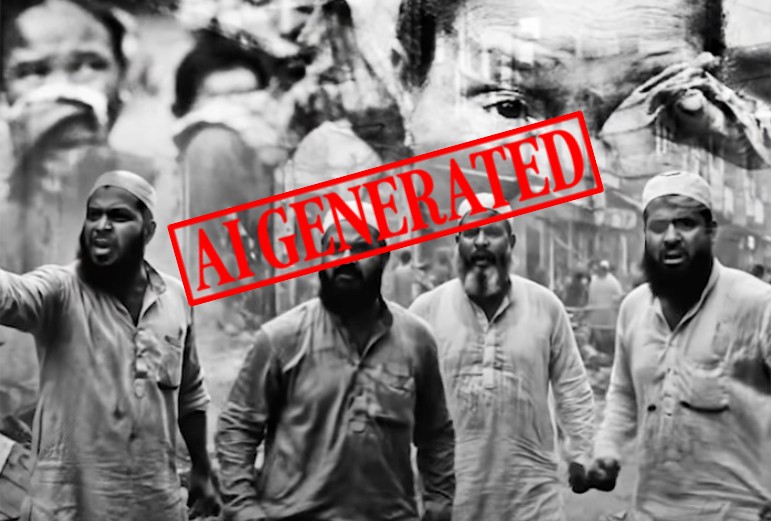

India is currently holding state elections across five regions, but a troubling trend has emerged ahead of the vote, especially in key battlegrounds like Assam and West Bengal, where anti-Muslim messaging is spreading rapidly. This campaign blends traditional political strategy with the viral reach of artificial intelligence (AI).
In one widely shared video posted by a regional branch of the ruling party, a senior leader is depicted shooting at two men wearing Muslim skull caps, while captions question their loyalty and citizenship. The imagery is explicit and reinforces a long-standing stereotype that portrays Muslims as “foreigners,” particularly targeting Bengali-speaking Muslims as so-called “infiltrators.”
What makes this content especially concerning is both its scale and its sophistication. An analysis of hundreds of social media posts found that many meet international definitions of hate speech, with a significant number using AI-generated visuals to exaggerate or fabricate threats. These posts often rely on visible markers—such as religious clothing—to draw stark and dehumanizing distinctions between “citizens” and “outsiders.”
Experts caution that this rhetoric goes beyond electoral strategy. It deepens social divisions and helps legitimize discrimination. By repeatedly framing Muslims as illegal, dangerous, or disloyal, these narratives normalize prejudice and fuel hostility. The impact extends far beyond social media, contributing to rising tensions and real-world consequences across communities and even across borders.
You can read more in this important report by Pooja Chaudhuri, published on bellingcat.com.