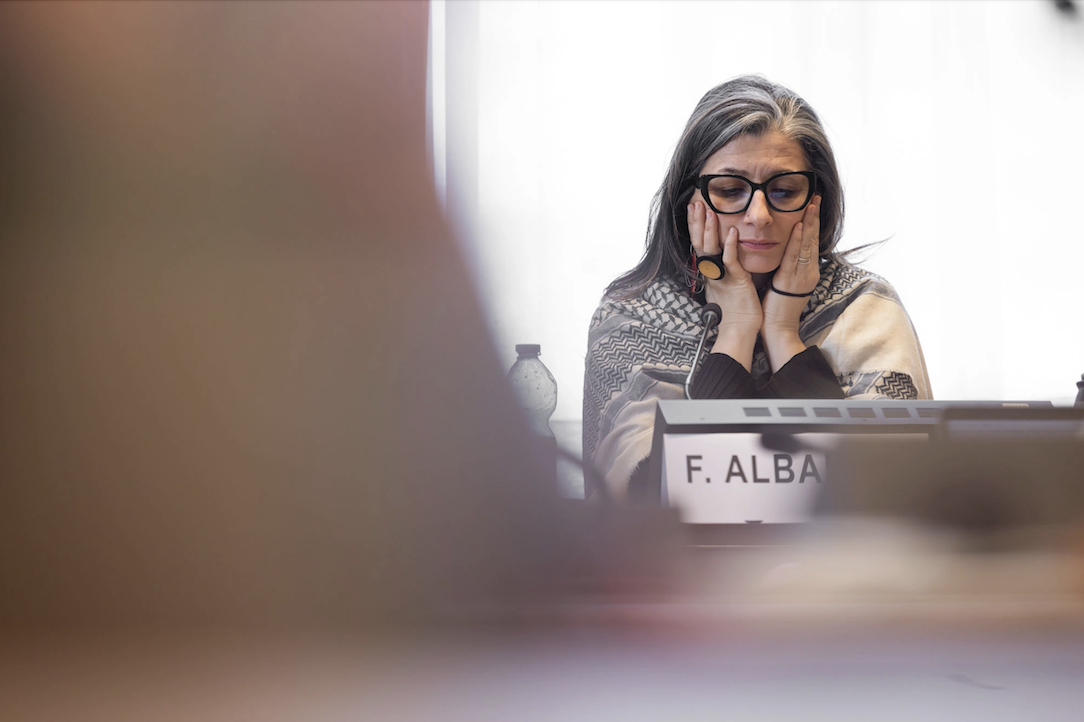

One July evening, Francesca Albanese stood before a cheering crowd in Ljubljana, Slovenia. She had just delivered a scathing critique of corporate and government involvement in Gaza. Then a whisper changed her life: the United States had imposed sanctions on her.
An unpaid U.N. investigator with little more than a platform and her voice, she suddenly found herself treated as a global threat. Sanctions imposed by the U.S. Treasury cut her off from the banking system, froze her assets, blocked property sales, and made even routine transactions nearly impossible. She later recalled thinking, “What kind of mafia is this?” before raising her fist in defiance as she faced the applauding crowd.
Albanese, an Italian legal scholar influenced by anti-fascist leaders and judges who fought the mafia, was not always an activist. Her career was rooted in law and diplomacy within international institutions, especially the United Nations. But her appointment as special rapporteur in 2022 turned her into a highly visible and controversial voice on Gaza.
Her reports, including Anatomy of a Genocide, accuse Israel of serious violations—claims Israel strongly denies. Critics in the United States and Europe describe her rhetoric as antisemitic and dangerous, while supporters see her as a rare voice willing to challenge silence amid widespread human suffering.
Now living in Tunisia, Albanese navigates a life of frozen accounts, severed relationships, and quiet isolation. Her family has filed a lawsuit in Washington, arguing that the sanctions violate free speech. For Albanese, speaking out has come at a high cost—but she insists it was necessary. “I poked the bear,” she said, “not in one eye, but in both.”
You can read the full report by Karl Mathiesen, published on Politico.
She Spoke Out About Gaza. Now She Can’t Use a Credit Card.