
“Our greatest mistake, it seems, is simply being Muslim.”
These words, spoken by Qasim (name changed), a labourer standing amid the rubble of a pirbari in Jaleshwar, in Assam’s Goalpara district, capture the fear and devastation confronting millions of Muslims in the state today. For Qasim, Islamophobia is not an abstract idea, it is the yellow bulldozer that reduced his lifetime of hard work to dust within moments.
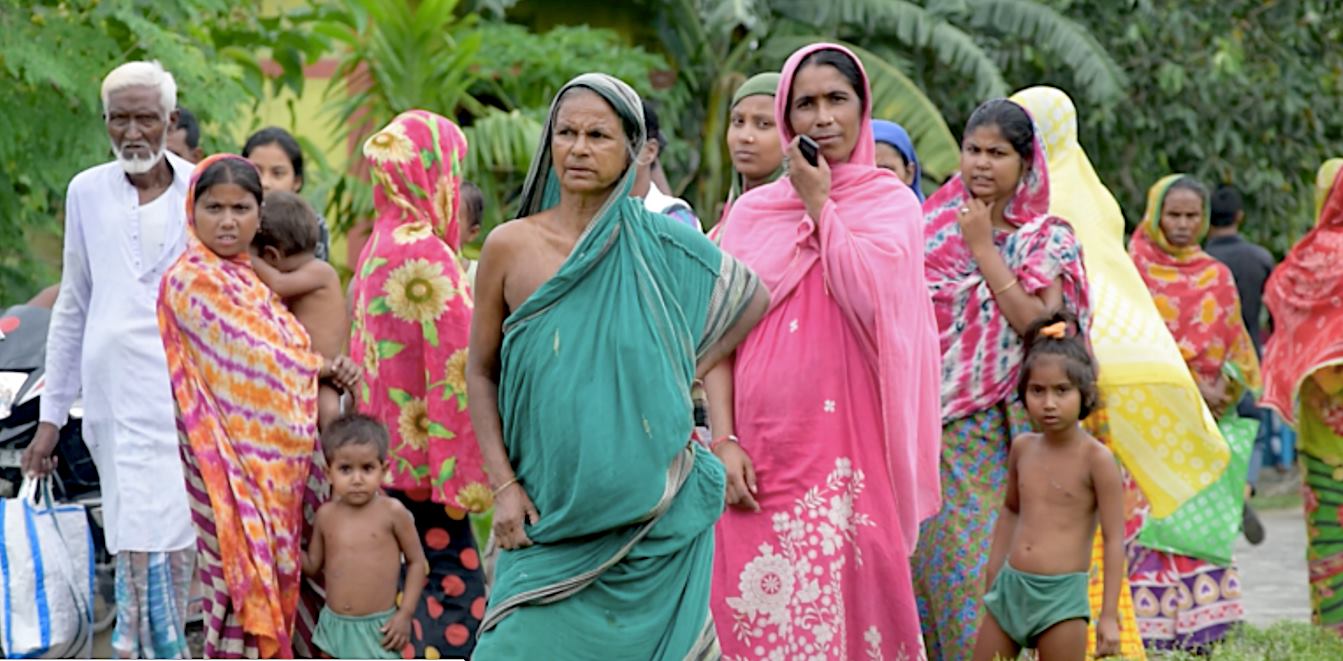
Across the sandy river islands stretching from Goalpara to Dhubri, locally known as chaporis, Muslim communities are living under a constant and uncertain fear. That fear is no longer confined to streets or neighbourhoods; it reaches into the highest levels of state power.
Qasim’s story is far from unique. It reflects the reality faced by more than ten million Muslims in Assam, a community whose citizenship, land, livelihoods, political voice, and dignity are increasingly being questioned and pushed into doubt.
In Assam, Islamophobia has increasingly taken the shape of what many describe as “state-backed Islamophobia.” It is driven by a political narrative promoted from the highest levels of government. Through a series of public statements in recent years, Chief Minister Himanta Biswa Sarma has helped create an atmosphere in which one particular religious community is portrayed as an “existential threat” to the state and its identity.
During a public address in Assam’s Tinsukia district on January 27, 2026, Sarma made remarks that many critics viewed as an unusually direct expression of hostility toward a religious minority by a democratically elected leader. Referring to Bengali Muslims, often called Miya or Mian in Assam, he said: “Congress can abuse me as much as it wants. My job is to hurt the Mian people… whoever can hurt them in any way, should do so.”
For many Muslims in the state, the statement was more than political rhetoric. It reinforced an atmosphere of fear and insecurity that has already been growing across Assam.
I met Sadiq Ali, who sells chicken biryani from a small, aging roadside stall. When I asked him about the Chief Minister’s remarks, his voice carried a mix of fear and helplessness.
“We are Indians. Our ruler, our Chief Minister, is Himanta Biswa Sarma. But if even he insults us and wants to harm us, what can we do? Who will protect us? He is a powerful man. When someone like him says people should hurt us, ordinary people may feel encouraged to attack us. So tell me, who will save us?”
For many Muslims in Assam, the concern goes beyond inflammatory rhetoric. Critics argue that the language used by Sarma has also normalized economic discrimination against Bengali Muslims. In one speech, he urged people to underpay Muslim rickshaw pullers, saying that economic hardship would eventually force them to leave Assam.
To many in the community, such statements deepen the sense that exclusion and hostility are no longer confined to social prejudice, but are increasingly reflected in public political discourse.
The narrative promoted by Sarma has not been limited to economic exclusion. Critics say it has also extended into the political sphere, with calls that many Muslims in Assam view as an attempt to marginalize them electorally.
At the same public programme, Sarma reportedly said that during the ongoing revision of electoral rolls, the names of “four to five lakh Miya voters” could be removed because, in his view, they should not be allowed to vote in Assam. According to reports, the remarks sparked widespread concern among civil rights observers and members of the Muslim community.
For many, these statements went beyond electoral politics. They were seen as a warning that an entire community’s political identity and democratic participation could be placed under question.
Conspiracy theories on “Jihad”
In Assam, the term “jihad” has increasingly been used in political rhetoric to frame ordinary activities associated with Muslims as part of a larger conspiracy. Earlier campaigns built around phrases such as Love Jihad and Land Jihad have now been followed by newer claims like Fertilizer Jihad and even Flood Jihad.
On May 19 in Guwahati, Chief Minister Sarma claimed that the rising number of heart and kidney diseases in the state was linked to the excessive use of fertilizers by Muslim farmers. He referred to this as “Fertilizer Jihad.”
The remarks drew criticism because they lacked established scientific evidence, yet they had an immediate social impact. Many Bengali Muslim vegetable farmers said the comments fueled suspicion and hostility toward them, turning ordinary agricultural practices into a source of public mistrust. For thousands of farmers, a single political statement was enough to cast doubt on their livelihoods and intentions.
How disconnected this narrative is from everyday reality becomes clear in the Kharupetia area of Assam’s Darrang district. Amjad Ali’s family has farmed this land for generations. This year, they cultivated okra, cucumbers, and tomatoes across two and a half acres.
Amjad rejects the allegations with quiet frustration. “The same vegetables we grow and sell are eaten by our own families and communities,” he says. “So what exactly is this ‘fertilizer jihad’ people are talking about?”
For farmers like him, such accusations feel both irrational and deeply damaging, turning ordinary agricultural work into the target of suspicion and political rhetoric.
Amjad is far from alone. He is one of thousands of Muslim farmers across the Kharupetia, Bechimari, and Balugaon regions who form a vital part of Assam’s commercial agriculture sector. For generations, these communities have supplied vegetables and crops to markets across the state.
Today, however, conspiracy theories such as “fertilizer jihad” have placed even their farming practices under suspicion. Farmers who once saw themselves simply as cultivators and providers now find their livelihoods entangled in political narratives and communal mistrust.
Similarly, the severe flooding in Silchar in June 2022 was, in some political and media narratives, described as “flood jihad.” In the aftermath of the disaster, four Muslim men were arrested amid allegations that a section of the embankment along the Barak River had been deliberately damaged.
However, many engineers and independent experts pointed instead to a combination of extreme rainfall, infrastructure stress, and broader flood management failures as the primary causes of the catastrophe, framing it as a natural disaster worsened by systemic issues rather than intentional sabotage.
In January 2026, a new phrase “education jihad” began appearing in public discourse in Assam. It was used in some narratives to frame the educational progress of Muslim students, their success in competitive exams, and their aspirations for government jobs as part of a supposed wider conspiracy.
For many observers and members of the community, this framing felt deeply troubling. It suggested that not only identity, but also ambition and social mobility among Muslims, could be viewed with suspicion, turning education itself into a contested and politicised space.
Paikan and the eviction drive
One of the most violent episodes in recent memory unfolded in the forested Paikan–Ashodubi area. The night of July 17, 2025, is now remembered by many as a deeply troubling moment in Assam’s recent history.
On that day, thousands of displaced residents took to the streets to demand land rights and protection from eviction. During the confrontation that followed, police opened fire, and 19-year-old Sukwar Ali was among those who lost their lives. For many in the community, his death came to symbolise a painful belief that vulnerability and state violence are often shaped by religious identity.
An analysis by the Panel of Independent International Experts (PIIE) stated that the incident occurred during an administrative eviction operation and noted that there was no clear evidence of armed resistance or an imminent threat that would justify the use of lethal force.
Critics and rights observers argue that such incidents reflect a broader pattern of dispossession and fear, where eviction drives are experienced not just as administrative actions, but as part of a wider climate of insecurity affecting Muslim communities in their homes and on their land.
Dhubri: Large-scale eviction of Muslim families
In Assam’s Dhubri, eviction drives have become a major source of fear and controversy. According to a report by Jamiat Ulema, more than 20,000 Muslim residents have been displaced in recent operations.
Rights groups and community representatives say that many of those affected are Indian citizens, but are often described in parts of the media as “Bangladeshi” or “foreigners,” a framing they argue fuels suspicion and public hostility.
Sarma has defended the eviction drives, calling them part of what he described as a “last battle for the survival of Assamese identity,” and has also urged local residents not to provide shelter to those who have been displaced.
For critics, these actions go beyond routine administrative measures. They argue that, taken together, the evictions and the surrounding rhetoric reflect a growing pattern of exclusion that is reshaping the lives of already vulnerable communities.
Digital hate and the use of AI
In recent years, concerns about anti-Muslim rhetoric in Assam have also extended into the digital space, including the use of AI-generated content in political messaging.
According to a report by Al-Jazeera, dated February 9, 2026, the Assam BJP shared an AI-created video titled “Point Blank Shot.” The video depicted Himanta Biswa Sarma appearing to fire at images of two Muslim men holding rifles, with the words “No Mercy” displayed on screen.
Critics say the imagery suggested a framing of Muslims as targets rather than citizens, raising serious concerns about the tone of political communication in the digital age. Following public backlash, the video was later removed.
The same report also noted that a similar AI-generated video had circulated in September 2025, which portrayed a fictional scenario suggesting a Muslim “takeover” of Assam, a claim widely described by observers as misleading and fear-inducing.
According to the Panel of Independent International Experts (PIIE) report, citizenship and identification processes in Assam are increasingly viewed by critics as being used in a highly coercive way. The report highlights data suggesting that Bengali-speaking Muslims make up a disproportionately high share of those killed in police encounters in the state, around 54%, even though Muslims overall account for approximately 34.22% of Assam’s population. Critics interpret this disparity as raising serious questions about how state force is being applied across different communities.
The report also cites official figures indicating a sharp rise in police encounters, reportedly around 1300% between May 2021 and August 2022, pointing to what it describes as a significant shift in law enforcement practices during this period.
In addition, it documents multiple deaths linked to eviction operations since 2016, all of them involving Muslim individuals. These include the death of 55-year-old Bayat Ali in January 2024, reportedly due to exposure during extreme cold, and 19-year-old Hafeez-ur-Rehman in August 2025, who is said to have died of heatstroke while living in a temporary shelter after eviction.
The report argues that such cases highlight serious humanitarian concerns, particularly regarding shelter, safety, and state responsibility during and after displacement drives.
As critics describe it, Islamophobia in Assam is no longer limited to social prejudice or political rhetoric. They argue that it is increasingly reflected in state actions that affect Muslims across multiple areas of life; including citizenship, land rights, employment, education, and personal identity.
They say that a combination of hardline political statements, police action in some incidents, and large-scale eviction and demolition drives has contributed to a situation where many in the community feel the usual protections of justice and due process are weakening.
The India Hate Lab study provides statistical context to these concerns, reporting 1,318 incidents of hate speech recorded across India in 2025, with 98% of them directed at Muslims.
Against this broader national backdrop, Assam is often described by rights groups and observers as a particularly tense environment. They argue that political narratives around identity have become increasingly charged, especially in the run-up to the 2026 state elections, with serious implications for how issues of citizenship, property, dignity, and belonging are being discussed and contested in public life.
The sense of insecurity described by Hafiz Rafique reflects, for many observers, a wider atmosphere of fear in parts of the state. He explains: “We live in an unknown fear… when we go out, we worry that someone might attack us, mistaking us for Muslims.”
For him and others who share similar experiences, this fear is not seen as isolated or personal. Instead, it is increasingly understood as a shared feeling among many Muslims in Assam, one that shapes everyday life in subtle but persistent ways. People say it can be felt in neighbourhoods, markets, schools, and fields, and even in more formal spaces like administrative records and voter lists, affecting how identity itself is experienced in daily life.
Following the election results on May 4, 2026, concerns have been raised by critics that the existing political direction in Assam is likely to continue with even greater intensity. They argue that both the governing approach and the dominant political narrative around identity are set to persist.
Attention has also been drawn to remarks attributed to the Chief Minister about “breaking the spine” of Bengali Muslims, which critics say have deepened fears within the community. For them, such language reflects a broader shift in the state’s politics; from a contest over governance and power to something they see as increasingly shaped by questions of identity and belonging.
And perhaps this is one of the most troubling dimensions of Islamophobia. Its impact is not limited to physical harm, loss of homes, or challenges to citizenship. Over time, critics argue, it can also weaken the moral and civic foundations of a society.
When fear, humiliation, and exclusion of any community become normalised in public life, the consequences extend beyond that group alone. Many believe that in such an environment, the principles of justice, democracy, and shared humanity are all placed under strain, affecting society as a whole.
The reporting for the story was supported by a grant from the Human Rights and Religious Freedom Journalism Grant Program.