
Local disputes over Muslim cemeteries, mosques, and the accommodation of religious practices are increasingly being drawn into a broader global far-right narrative on social media. These disputes are being linked to claims of “Islamization,” demographic change, and cultural displacement.
This is according to an analysis by Peter Chai, a research associate at the Faculty of Political Science and Economics at Waseda University in Tokyo. His analysis was published by the Center for the Study of Organized Hate (CSOH), a nonprofit, nonpartisan think tank based in Washington, D.C.
The analysis identifies a three-stage process. First, the context and circumstances surrounding a local dispute are stripped away. The issue is then reframed using far-right language and slogans before being amplified internationally. Eventually, the same narrative returns to Japan with greater political force.
For example, a video of Japanese lawmaker Mizuho Umemura opposing the allocation of additional land for Muslim burials was viewed more than 12.8 million times after being shared by a U.S. based X account.
Other social media posts have falsely described parts of Japan as “no-go zones” for foreigners or claimed that Japan had banned halal food, mosques, and the Muslim call to prayer. According to Chai, such claims transform local disputes into supposed evidence of a broader “clash of civilizations.”
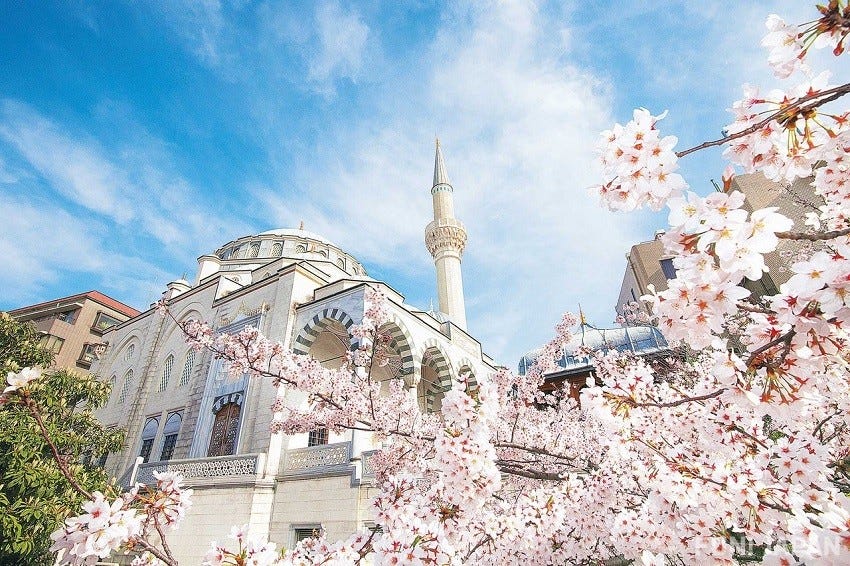
These tensions are emerging as Japan’s Muslim population continues to grow. The number of Muslims in Japan was estimated at 420,000 in 2024. At the same time, the country has only about a dozen cemeteries that can accommodate Muslim burials. Plans for new mosques and Muslim cemeteries have also faced opposition in several prefectures.
Chai argues that the backlash against Muslims cannot be explained solely by Japan’s domestic politics, nor can it be viewed simply as a reaction imported from abroad. Instead, Japanese nationalist actors and far-right networks overseas are reinforcing one another. Through social media, they are turning questions about religious accommodation into broader political conflicts over immigration, national identity, and demographic change.
Japan is facing a shrinking population and an increasing reliance on foreign workers. Against this backdrop, the analysis warns that social media networks could make hostility toward Muslims and other immigrant communities increasingly widespread and socially acceptable. As a result, local disputes could quickly become part of a global political struggle over who belongs in society and who is viewed as an outsider.
Read Peter Chai’s full analysis, prepared for the Center for the Study of Organized Hate, here:
The Global Far Right’s Growing Fixation on Muslims in Japan