

More than a month has passed since China’s new Law on Promoting Ethnic Unity and Progress came into effect, but concerns are growing among human rights activists and Uyghur representatives about its potential impact.
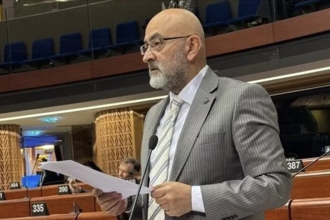
In an opinion piece published by The Diplomat, Omer Kanat warns that the law could further entrench China’s policy of forced assimilation rather than protect minority rights. Kanat is a Uyghur human rights advocate and executive director of the Uyghur Human Rights Project (UHRP).
According to Kanat, Beijing presents the law as a measure intended to promote ethnic unity, social harmony, and the protection of minority rights. He argues, however, that its practical effects could be the opposite. In his view, the law codifies the policy of forced assimilation pursued under President Xi Jinping, aimed at incorporating minority identities into a broader state-defined Chinese identity.
Kanat writes that this policy is not new for Uyghurs. He cites a 2017 statement by a Chinese official that described the government’s strategy toward Uyghurs in terms of erasing their ethnicity, roots, ties, and origins. Since then, Chinese authorities have faced widespread allegations of restricting Uyghur religious, cultural, and social life.
Under the new law, schools, religious institutions, government agencies, and families are assigned responsibility for promoting the state’s definition of “ethnic unity.” According to Kanat, the law requires parents to teach their children to love the Chinese Communist Party, expands the use of Mandarin Chinese in education, and requires religious institutions to continue the “Sinicization” of religion, or the process of adapting religious practices and institutions to state-defined Chinese norms.
The opinion piece also says the law’s effects began to be felt within the Uyghur community soon after it took effect. Kanat cites an incident in which two Uyghur sisters and their mother were reportedly arrested just three days after the law came into force, allegedly for sending business supplies to another sister in Turkey. They were reportedly accused of “supporting terrorism.”
One of Kanat’s main concerns is the law’s potential reach beyond China’s borders. He points to Article 63, which he says could allow authorities to target organizations and individuals abroad if Beijing determines that their activities undermine “ethnic unity” or contribute to ethnic divisions.
Kanat argues that this provision could provide a new legal basis for transnational repression against Uyghurs, Tibetans, Southern Mongolians, Chinese government critics, and other diaspora communities.
The opinion piece also describes the international response as inadequate. Kanat notes that U.N. High Commissioner for Human Rights Volker Türk has called for the law to be repealed, while eight U.N. special rapporteurs have expressed concern. The European Parliament has also called on China to repeal the law, while the European Union and Taiwan have warned about its potential extraterritorial reach.
According to Kanat, the U.S. response has so far been relatively cautious. The U.S. State Department has described the law as “problematic,” while some members of Congress have called for stronger action. Kanat argues that statements alone are insufficient and that governments should publicly condemn the law, demand its repeal, and take practical steps to protect diaspora communities from potential transnational repression.
Kanat concludes that the threat posed by China’s new ethnic unity law is no longer merely theoretical. He warns that forced assimilation and cross-border repression could become more deeply embedded in China’s state system unless governments take urgent action.
Read Omer Kanat’s full opinion piece in The Diplomat here: